Explore the KeyNotes Curriculum
A curriculum designed for learning together.
Discover how KeyNotes develops confident, creative and independent pianists through a playful, purposeful and connected approach to piano learning.
Download the Program Guide Download the complete guide to explore our programs, curriculum and learning pathway.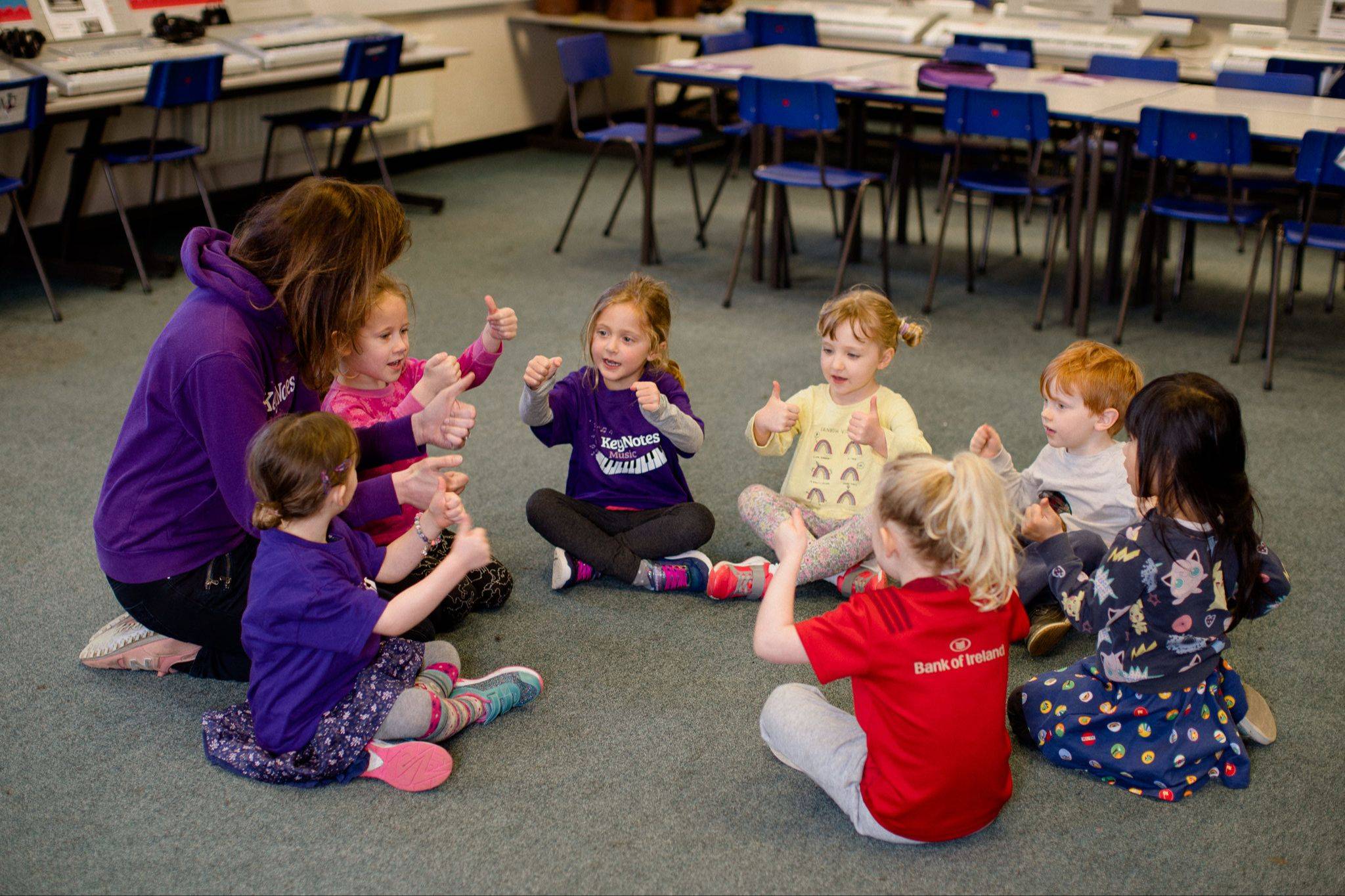
More than learning pieces
Developing musicians, not just pianists.
KeyNotes gives students opportunities to build a broad and connected understanding of music. Playing, reading, listening, creating and collaborating are woven together so that musical knowledge is continually put into practice.
Playing & Technique
Students develop coordination, control and healthy piano technique through carefully structured practical experiences.
Reading & Understanding
Musical notation is connected to patterns, sound and practical experience rather than learned as an isolated skill.
Rhythm & Aural Skills
Singing, movement, listening and ensemble activities build secure rhythmic understanding and musical awareness.
Creativity
Improvisation, composition and musical choices help students use what they know rather than simply reproduce what they have learned.
Communication
Students explore dynamics, articulation, style, expression and the many ways musicians communicate ideas through sound.
Learning Together
Ensemble playing, shared challenges and musical collaboration make other learners an active part of the learning experience.

Connected learning
A group should change the way children learn.
KeyNotes isn't six individual piano lessons happening in the same room. The group itself is part of the learning.
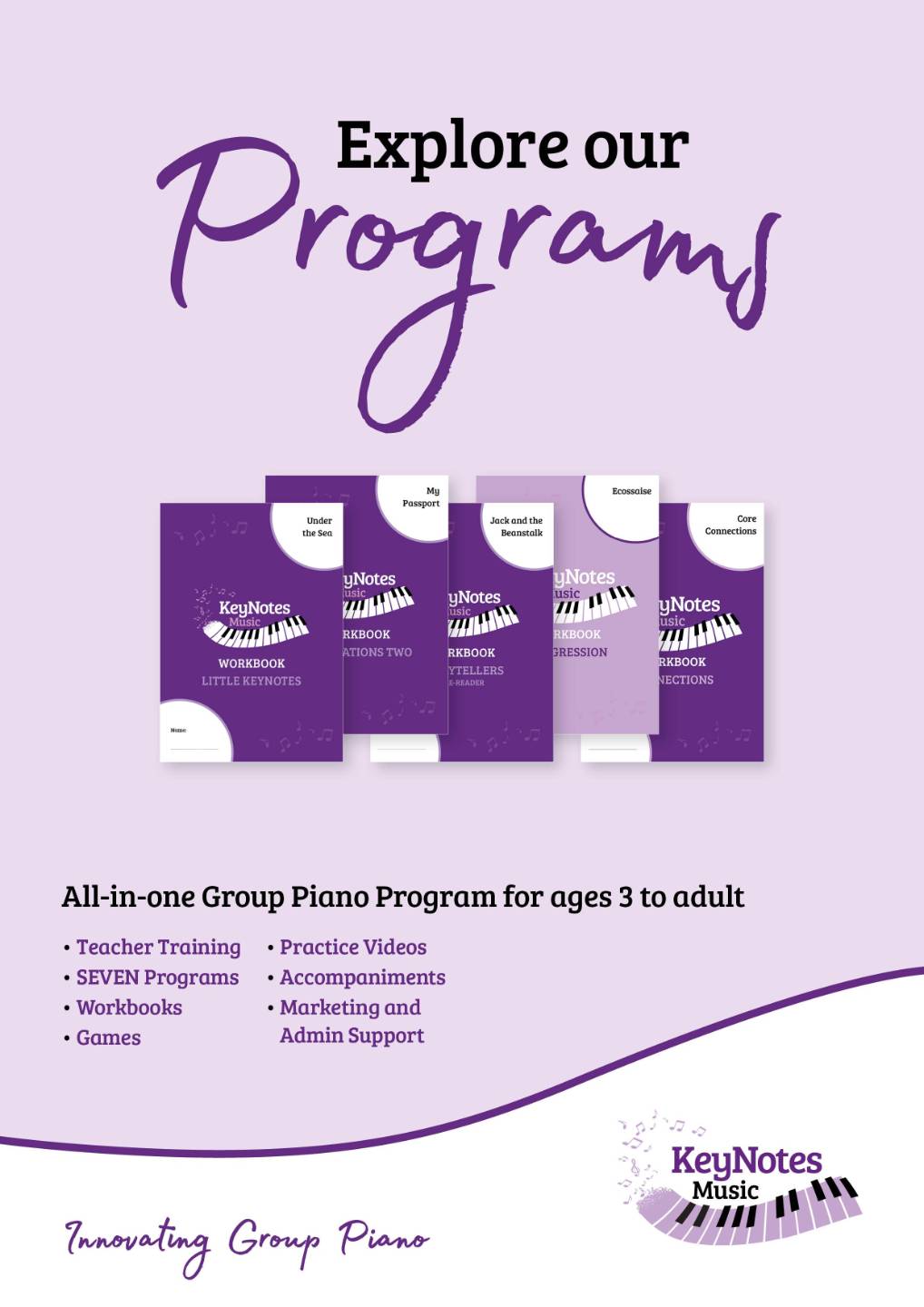
Students listen to one another, perform together, explore musical ideas, solve problems, create, respond and learn through shared musical experiences.
The teacher guides and facilitates that learning, creating opportunities for children to discover ideas with and through others while still developing their own individual piano skills.

Built to develop over time
A spiral curriculum that keeps learning moving forward.
Musical understanding rarely develops in a straight line. KeyNotes revisits important ideas in new contexts, allowing students to deepen their understanding and apply familiar concepts with increasing independence and complexity.
This spiral structure also makes the curriculum flexible. Teachers can respond to different levels of experience within the same class, offering support or challenge while keeping students connected through a shared musical focus.
The KeyNotes pathway
A continuous journey through piano learning.
KeyNotes supports students from their first playful experiences of music and the keyboard through increasingly sophisticated piano playing and musical understanding.
Pre-Notes
First musical and keyboard experiences.
Little KeyNotes
Playful foundations for early piano learning.
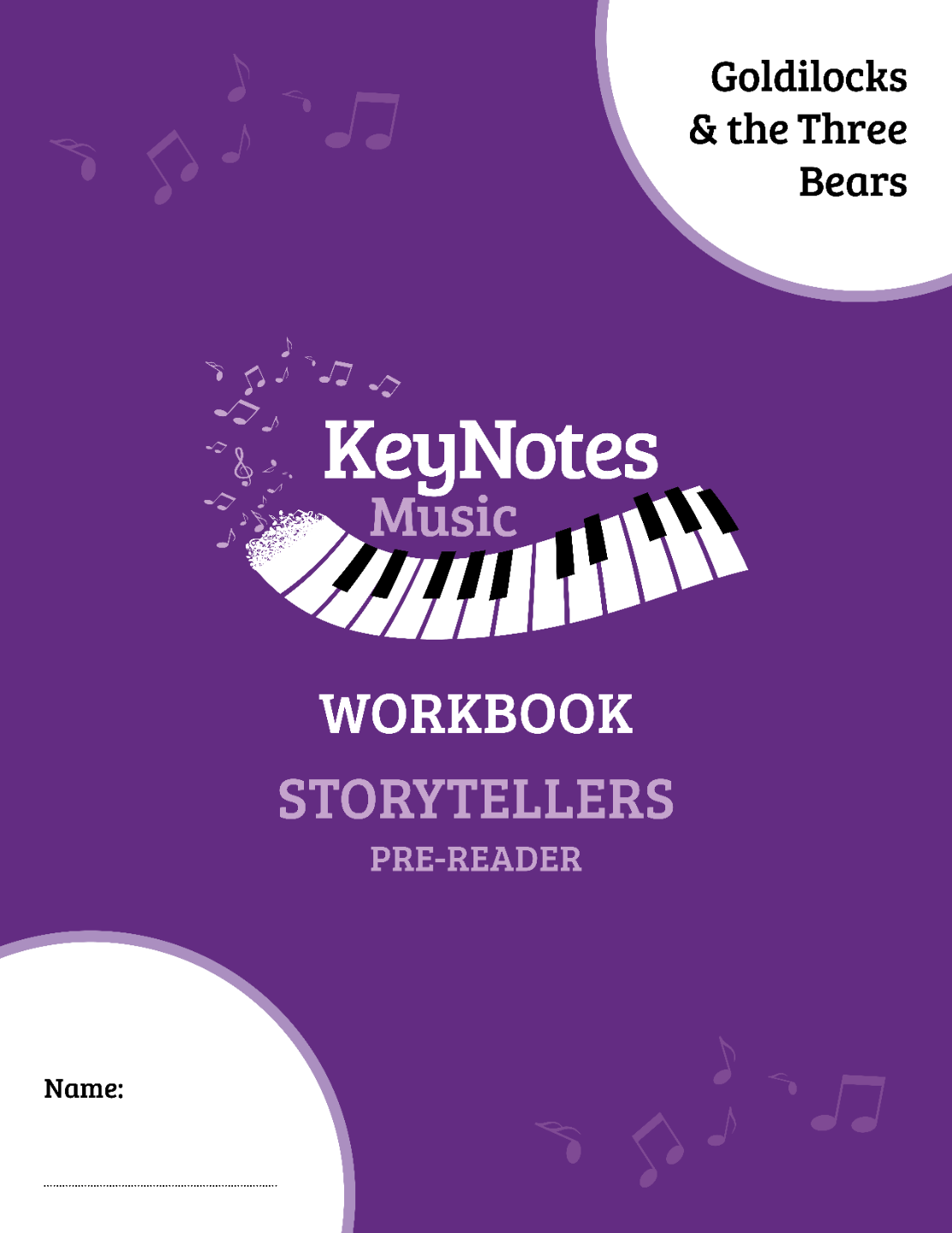
Storytellers
Reading, playing and creating through imaginative themes.
KeyNotes Play
Developing musicianship through engaging musical contexts.
Foundations
Elementary to intermediate piano development.
Progression
Continuing into more advanced musicianship and repertoire.
Inside the curriculum
Materials designed to make musical ideas visible, practical and memorable.
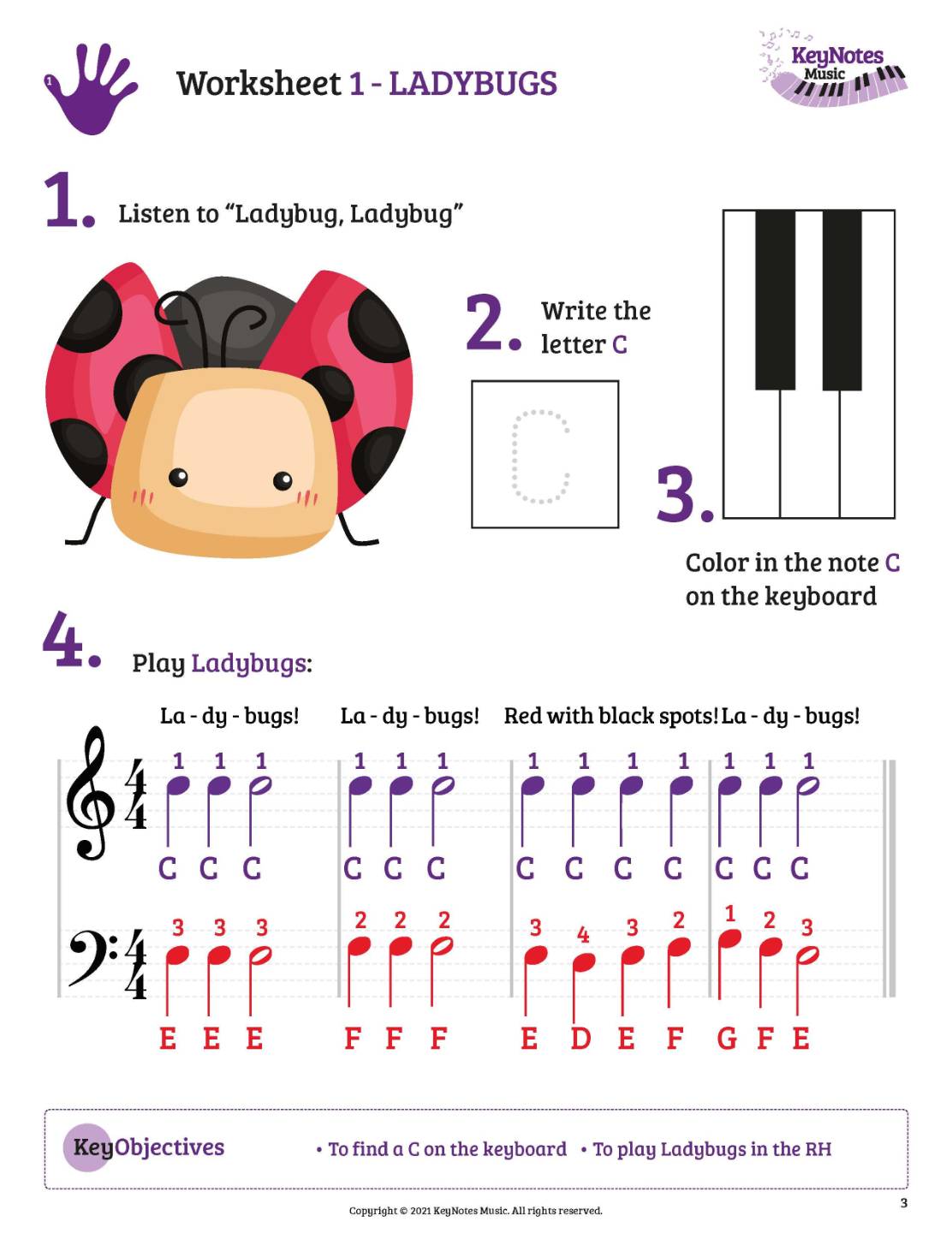
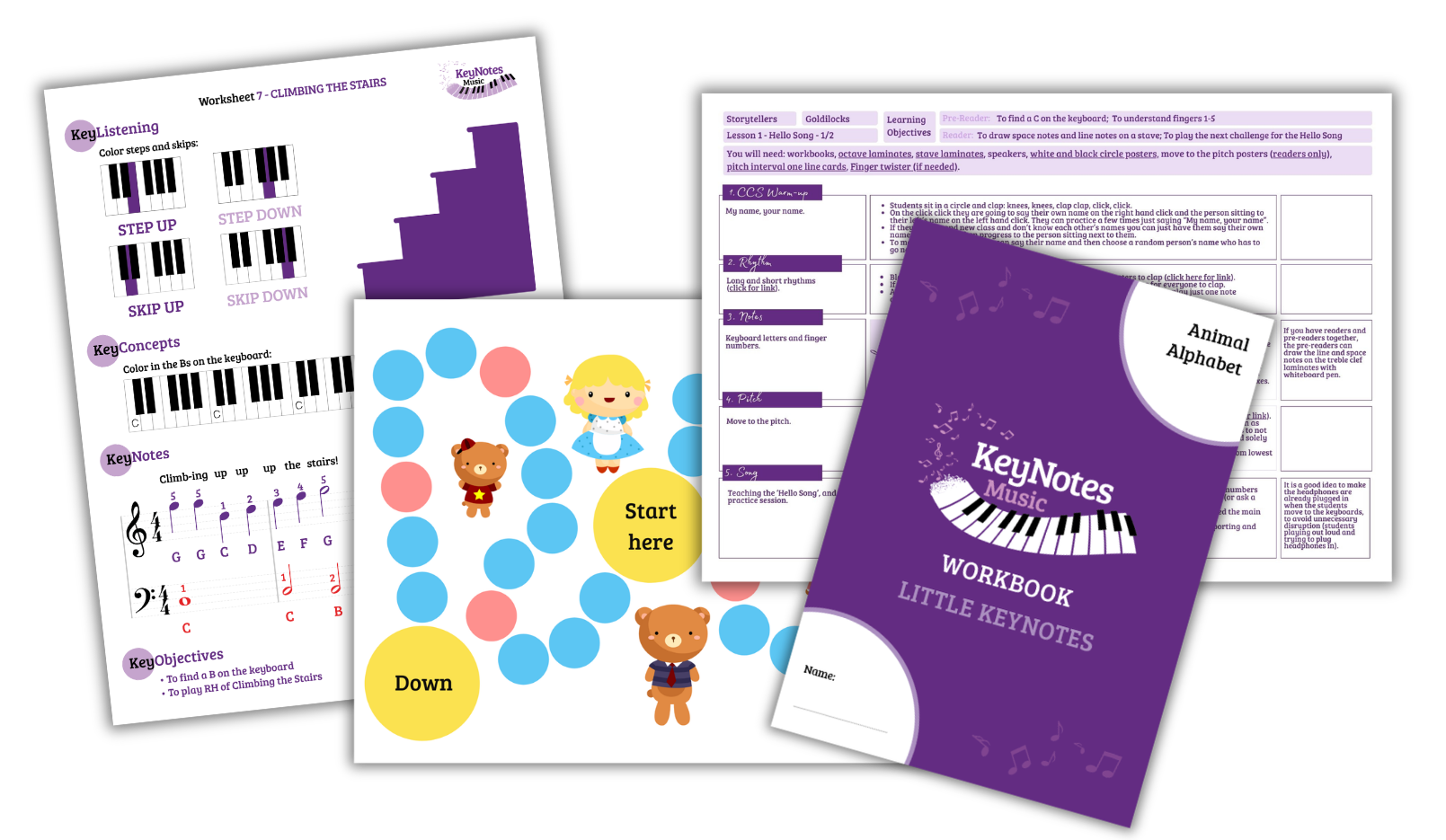
KeyNotes materials support the learning that happens in the classroom rather than replacing it. Students encounter musical concepts through playing, movement, listening, discussion, exploration and creativity before continuing to develop them through carefully designed activities and resources.
- Student workbooks and curriculum materials
- Creative and practical musical activities
- Reading, rhythm, technique and musicianship
- Improvisation and composition
- Resources for different ages and stages
- Opportunities for support and additional challenge
For the teacher
The structure is there. The teacher brings it to life.
KeyNotes gives teachers a clear curriculum framework and the resources to deliver it, while leaving room for responsive teaching and professional judgement.
Lesson guidance, teaching resources, student materials, games and activities work together to support the whole learning experience — helping teachers focus on their students rather than creating an entire group curriculum from scratch.
The result is consistency and progression without turning teaching into a script.
The KeyNotes approach
Playful. Purposeful. Connected.
Three ideas run through every KeyNotes program and every stage of the curriculum.
Playful.
Curiosity, imagination and active musical experiences invite students into learning.
Purposeful.
Every activity connects to musical understanding, skill development and progression.
Connected.
Students learn through shared musical experiences, interaction and collaboration with others.
Explore the programs
Take a closer look at the KeyNotes curriculum.
Download the complete KeyNotes Program Guide to explore our programs, curriculum, progression and approach to learning piano together.
Download the Program Guide